
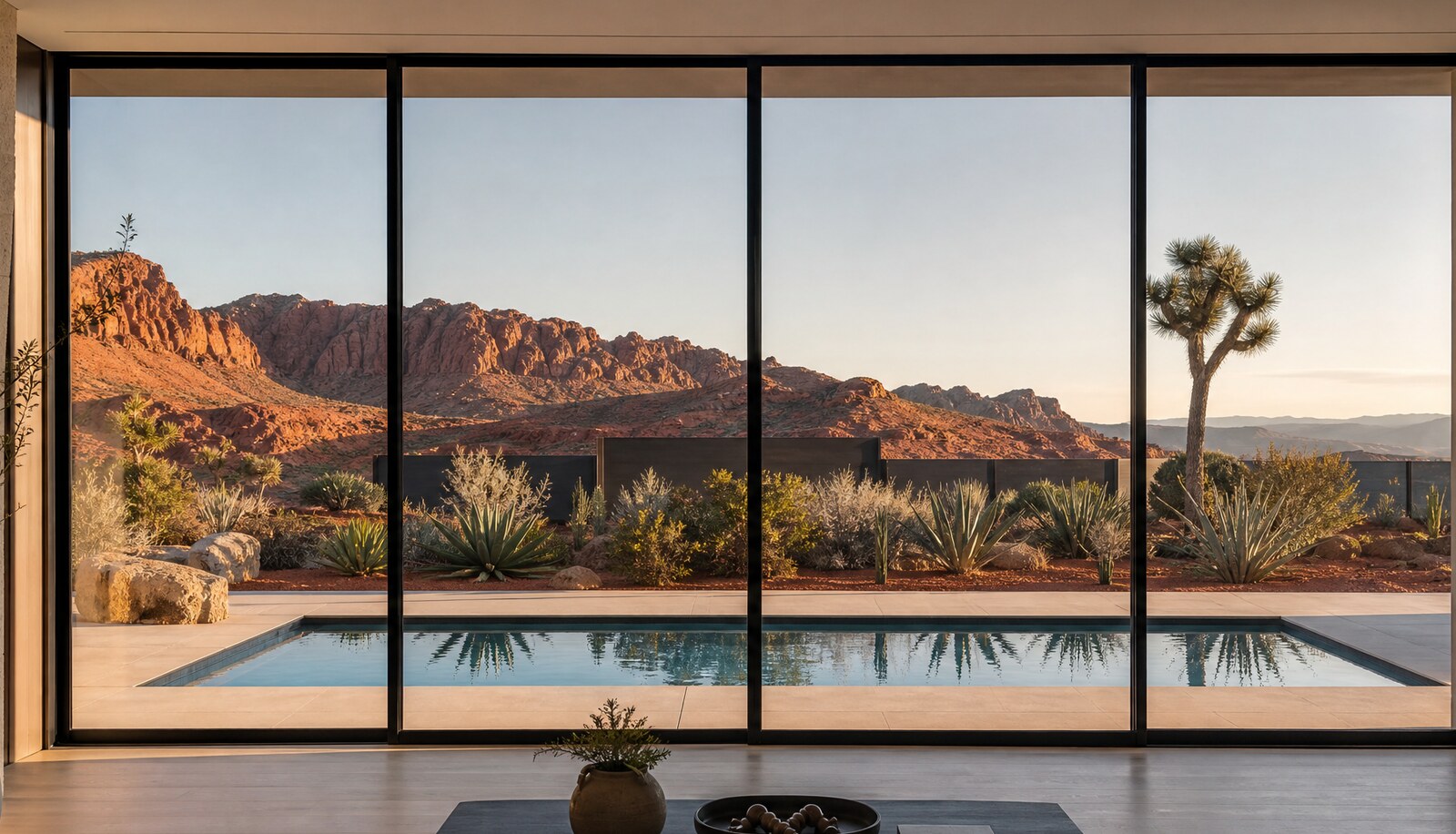
Smart glass is most useful when it is considered as part of the opening rather than as a late visual upgrade. The decision connects privacy, daylight, the selected glass assembly, power and controls, surrounding architecture, and the people responsible for the field work.
Start with the desired privacy state
Describe the moment you are trying to create. Do you want a clear view by default and more privacy on demand? Should the opening feel open to a landscape during the day but become more private during gatherings? Is the priority a bathroom, office, front entry, patio wall, or another room with a specific visibility need?
State the desired result in plain language first. It is more useful than starting with a technology label because it gives the project team a condition to solve.
Confirm which glass units can carry the upgrade
Smart glass belongs in a compatible, specified assembly. Not every door or wall system has the same construction, glazing options, or integration path. Use the exact documentation for the candidate product and work with the responsible parties to confirm what can be specified for the selected opening.
This is especially important when comparing a ready-to-buy product with a custom design path. The best route depends on the confirmed opening, operating system, glass composition, and project requirements.
Coordinate power, controls, and the opening
Power location, control preference, wiring path, access for service, wall finishes, and coordination with electrical work should be addressed early. They affect more than the glass itself. A clear project record should identify what has been selected, where the control will live, and which team member confirms each part of the installation.
Avoid promising a finished control experience from a concept image. Final behavior should be tied to the actual selected system and project conditions.
Use Arizona sun exposure as a design input
Arizona light and heat make orientation worth discussing early. Note the direction of the wall, overhangs, nearby shade, view priorities, and when the room receives its strongest light. These observations help organize the conversation about glass, privacy, and comfort without assuming universal performance from any one option.
Bring photographs at different times of day when possible. They can reveal glare, sightlines, and exposure conditions that a plan alone does not show.
Move from inspiration to an informed brief
Use the Smart Glass page to explore the project path, compare it with glass wall planning, or begin a Custom Door Designer brief when the opening needs a purpose-built solution. Find My Door Match is also a quick way to organize the high-level goals before a deeper product and field review.